
How to Improve Grip Strength: 7 Proven Ways to Build a Stronger Grip
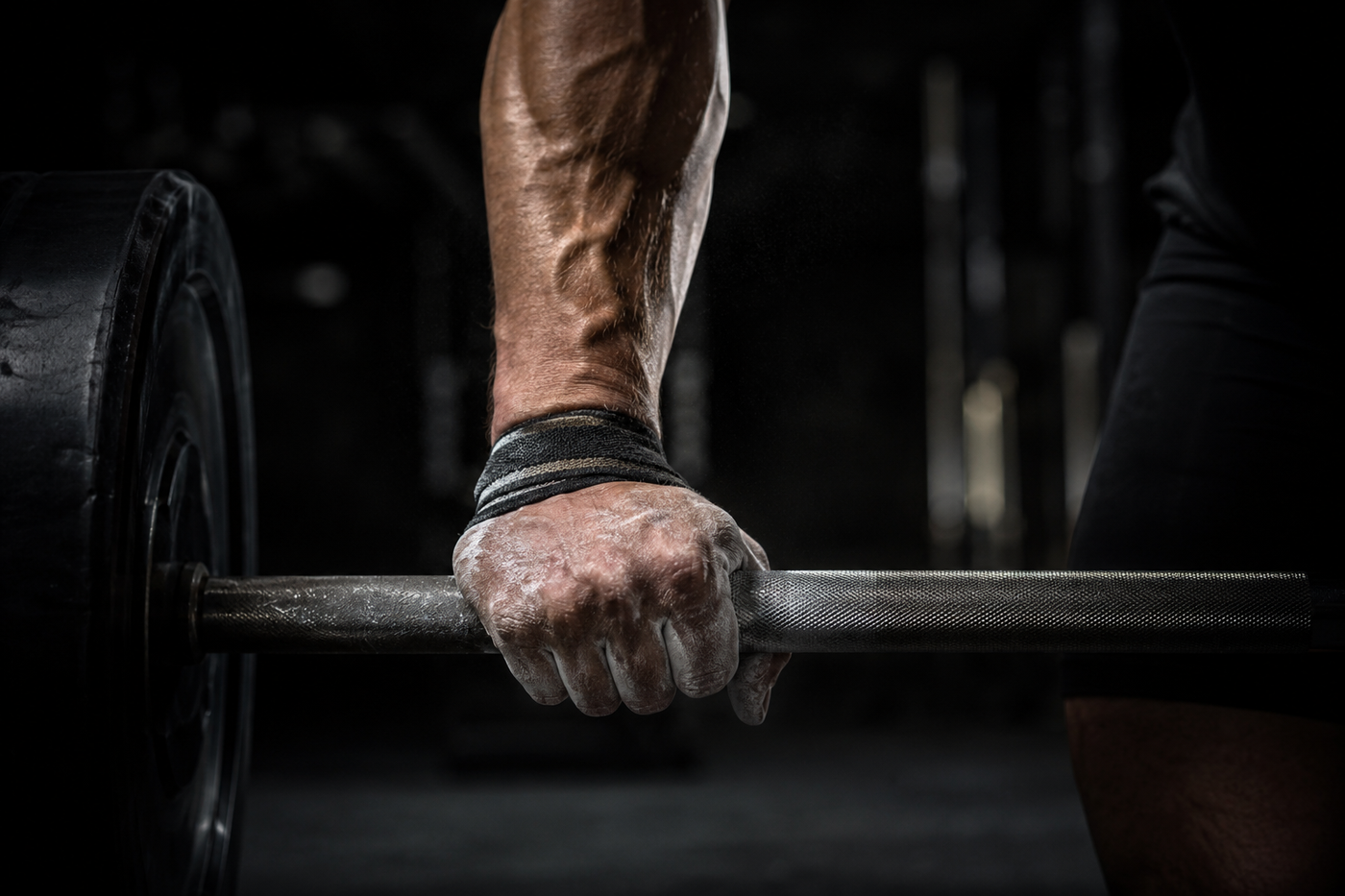
Your legs still had reps left, but the bar was sliding out of your hands. If your deadlift, your rows, or your pull-ups fail because your grip gives out before the target muscle does, you are leaving strength on the table. The good news is that grip is a trainable skill, and it responds fast.
Grip strength is more than a gym convenience. It carries over to almost every heavy lift, and research has repeatedly linked it to broader health and longevity, to the point where clinicians use it as a simple marker of overall physical robustness. Building a stronger grip pays off both under the bar and outside the gym.
In this guide you will learn how to improve grip strength using The Three Grip Types framework, seven proven methods to build each one, and how to program and track your progress so you actually see the numbers climb. This is how to improve grip strength without guesswork.
Grip is not one thing, it is three. The Three Grip Types framework, crush, pinch, and support, shows you why training all three builds a complete, resilient grip.
- Crush grip is hand closing against resistance, trained with grippers and holds.
- Pinch grip is thumb versus fingers, trained by pinching plates and thick objects.
- Support grip is holding a load over time, trained with dead hangs and carries.
- Train grip 2 to 3 times a week and progress it like any other lift.
- Track it with a dynamometer so you can see measurable improvement, not just guess.
Why Grip Strength Matters
For lifters, grip is often the weak link. When your hands fail before your back or legs, you cannot fully load the muscles you are actually trying to build. Strengthening your grip removes that ceiling, so your deadlifts, rows, carries, and pull-ups are limited by the target muscle rather than your fingers.
Beyond the gym, grip strength is one of the most studied simple indicators of physical health. Large research reviews have associated stronger grip with better overall strength and function, which is why hand dynamometers are a standard tool in clinical and athletic testing. A strong grip is a genuine signal of a robust body.
The Three Grip Types
Understanding grip means understanding that your hands work in three distinct ways. Train only one and you build an incomplete grip.
Crush Grip
This is the strength of your hand closing around an object, fingers pulling toward your palm. It is what you use to squeeze a gripper shut or hold a thick bar. Crushing strength is the most familiar type and the one most people picture when they think of grip.
Pinch Grip
This is your thumb working against your fingers to hold something without wrapping fully around it, like pinching two plates together. Pinch strength is usually the most underdeveloped of the three because almost nothing in daily life trains it directly.
Support Grip
This is your ability to hold a heavy load for time, the endurance side of grip. It is what keeps the bar in your hands during a long set of deadlifts or a loaded carry. For most lifters, support grip has the biggest direct carryover to their main lifts.
7 Proven Ways to Build a Stronger Grip
1. Dead Hangs
Simply hang from a pull-up bar with a full grip for as long as you can hold. Dead hangs build support grip and endurance while decompressing the shoulders. Start with sets of 20 to 30 seconds and add time as you improve.
2. Farmer's Carries
Pick up a heavy dumbbell or kettlebell in each hand and walk. Carries are one of the most effective grip builders because they demand support strength under a real load, and they train your core and traps at the same time.
3. Heavy Barbell Holds
Load a barbell, lift it as if finishing a deadlift, and simply hold it at the top for as long as your grip allows. This overloads support grip with more weight than you could carry, teaching your hands to hold heavier loads.
4. Plate Pinches
Pinch two weight plates together, smooth sides facing out, using only your thumb and fingers, and hold. This is the most direct way to build the neglected pinch grip. Start light, because this one humbles most lifters.
5. Hand Grippers
A quality adjustable gripper trains crush strength directly and lets you add resistance as you get stronger. Grippers are convenient because you can train them anywhere, and progress is easy to feel from week to week.
6. Wrist Curls and Extensions
Train the forearm flexors with wrist curls and the extensors with reverse wrist curls or extensions. Balancing both sides builds bigger, more resilient forearms and helps guard against elbow strain from heavy pulling.
7. Thick Bar and Towel Training
Wrapping a towel around a bar, or using thick grips, forces your hand to work harder to close around a wider surface. This challenges crush and support grip together and is a favorite among lifters chasing serious hand strength.
How to Program Grip Training
How Often to Train
Two to three focused grip sessions a week is plenty for steady progress. Because grip recovers relatively quickly, you can also add a single grip exercise to the end of your normal training days rather than dedicating separate sessions.
How to Progress
Treat grip like any other lift and apply progressive overload. Add time to your hangs and holds, add weight to your carries, or move up in gripper resistance. Small, consistent increases are what drive the adaptation.
How to Track It
What gets measured gets improved. A digital hand dynamometer gives you an exact number in pounds or kilograms, so you can test your grip every few weeks and confirm you are actually getting stronger. Objective numbers keep you honest and motivated in a way that vague feel never can.
Common Grip Training Mistakes
- Relying on straps for everything. Straps have their place on max pulls, but using them constantly means your grip never gets challenged. Train strap-free on your lighter sets.
- Only training crush grip. Squeezing a gripper is useful, but ignoring pinch and support leaves your grip lopsided. Train all three types.
- Neglecting the extensors. Constant gripping overdevelops the flexors. Adding extensor work keeps the forearm balanced and healthier.
- Going to failure every session. The small muscles and tendons of the hand need recovery. Push hard, but do not grind every set into the ground.
- Never measuring. Without tracking, you are guessing. A quick dynamometer test removes the doubt.
Frequently Asked Questions
How long does it take to improve grip strength?
Many people notice meaningful gains within four to six weeks of consistent training, since grip responds quickly to focused work. Steady progress over months comes from applying progressive overload rather than training randomly.
Can I train grip every day?
Light grip work can be done frequently, but heavy, near-maximal grip training needs recovery like any other muscle. Two to three dedicated sessions a week, or short additions to your normal training days, hits the sweet spot for most lifters.
Do hand grippers actually build grip strength?
Yes, for crush grip specifically. An adjustable gripper is an effective and convenient tool. For a complete grip, pair it with support work like carries and hangs and some pinch training.
Is grip strength really a health indicator?
Research has repeatedly associated grip strength with overall physical function and robustness, which is why it is used as a testing measure in clinical and athletic settings. It reflects broader strength rather than causing it, but it is a genuine and useful marker.
Should I use straps or train without them?
Both. Straps let you overload your back and legs on your heaviest pulls without grip being the limiter. Training strap-free on lighter sets ensures your grip keeps developing rather than being bypassed.
Build a Grip That Never Quits
A strong grip unlocks every heavy lift you own and signals a genuinely robust body. Train all three grip types, apply progressive overload the same way you would to a squat, and test yourself regularly so the progress is real and measurable. Pick two of the methods above, add them to your week, and watch the bar stop slipping.


